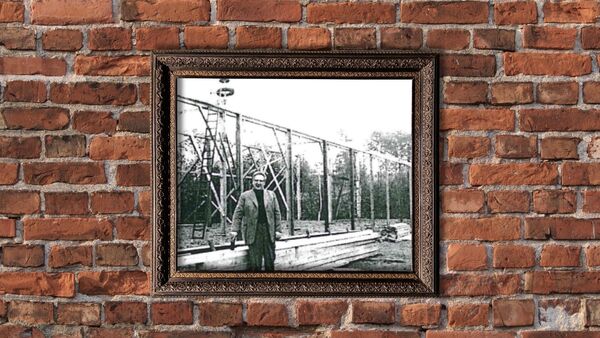
1936 – A Blacksmith, an Advertisement, and a Dream

It is February 13, 1936. The young blacksmith Ove Lamdahl Justesen, only 24 years old, opens the doors to his new workshop in Brenderup (Fyn, Denmark). A few months earlier, he had seen a small ad in Fyns Stiftstidende:
"Unique opportunities for a talented man."

The ad was for a forge for sale in Brenderup. Ove traveled there with his fiancée and father-in-law to see the place—a small workshop equipped with a lathe and a few simple tools, but with the right feel. He made a snap decision: this is where I will build the work of my life. For 14,500 Danish kroner, the forge became his, with help from family and friends who lent him the necessary down payment.
That same winter day, February 13, he moved in. That day marked the beginning of Brenderup’s history.


Fun fact: The turnover in the first year was 7,504.97 DKK—and the result? A deficit of 100 DKK. But the drive was stronger than the numbers.
1940s – Machines, Courage, and New Opportunities

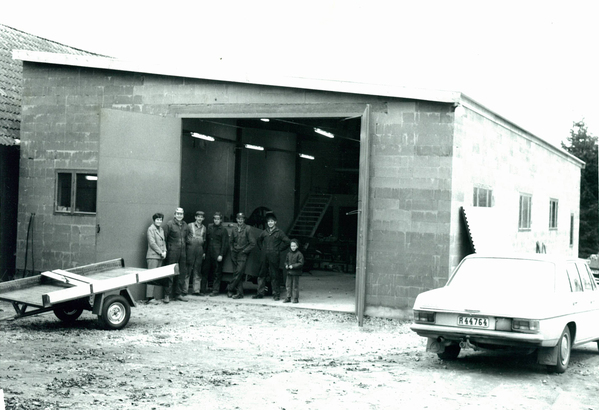
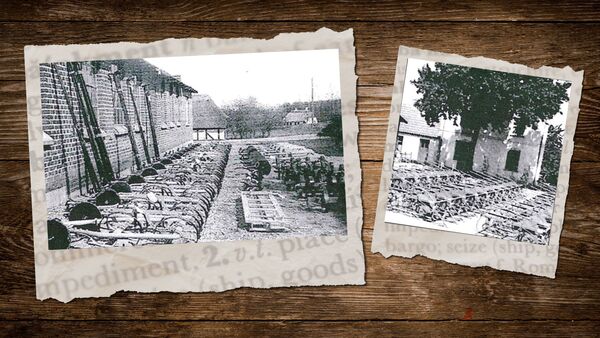
In the early years, Ove worked as the village blacksmith: repairing farm machinery, manufacturing fittings, and building a good reputation across northwestern Fyn. The workshop grew quickly, and in 1940 he moved to a larger plot near the station in Brenderup.

When World War II broke out, materials became hard to find, but where others saw problems, Ove saw opportunities. He bought old steel wires, straightened them by hand, and used them in production. The war forced creativity, and out of it grew Brenderup Maskinfabrik. Among other things, the factory produced beet washers—machines that cleaned sugar beets before processing—and beet cutters, which sliced beets for animal feed. The most famous product became the Roerslev harrow, an agricultural machine developed together with inventor Kristian Andersen.

1950s – From Forge to Machine Factory

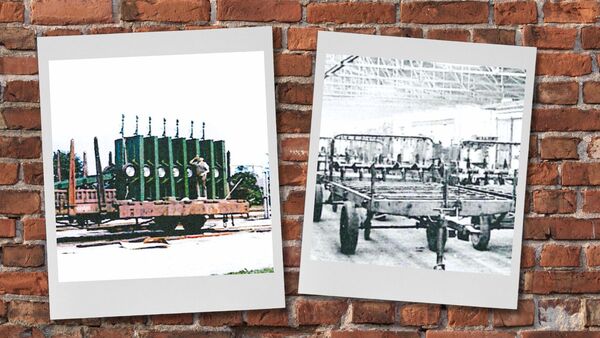
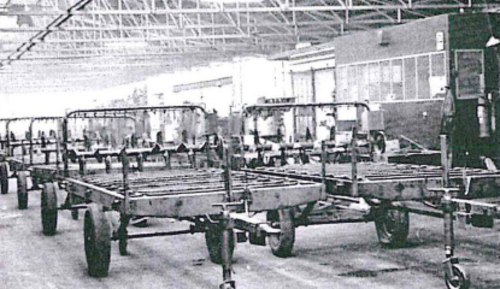
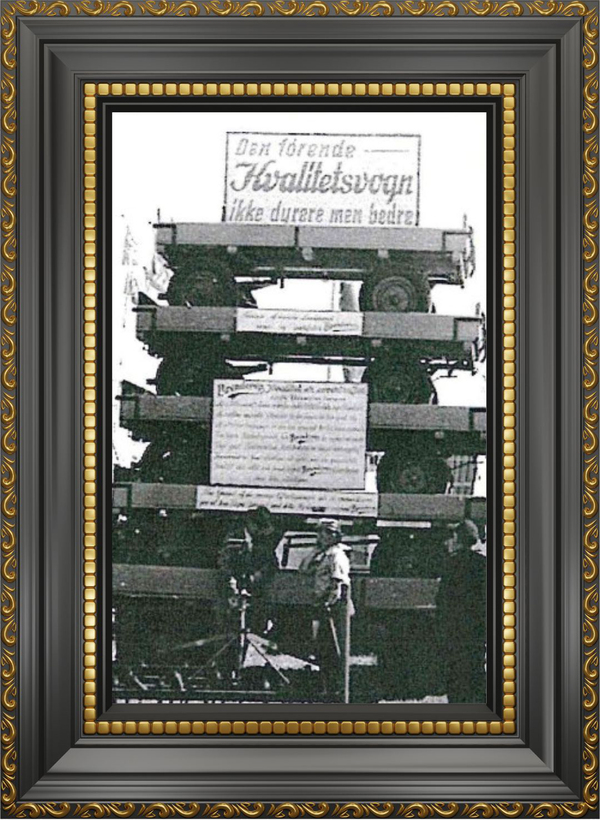
After the war, the mechanization of agriculture accelerated, and Brenderup developed several new machines. The most talked-about was the “rubber wagon”—a robust farm cart with an unusually advanced towing mechanism, a so-called “floating hitch”, a flexible system that made driving smoother and allowed the cart to follow the terrain precisely.

The design was complex, and therefore expensive, but the quality spoke for itself. The rubber wagon quickly gained a reputation as the best-built cart in all of West Funen, an early sign of Brenderup’s focus on quality and durability already in the 1950s.

But the world was changing fast, and Ove realized the future lay in transport, not just agriculture. On a trip to Germany, he saw a type of trailer that didn’t exist in Denmark—a trailer that could be attached to a car, not a tractor. That idea came home with him.

Late 1950s – The First Trailers

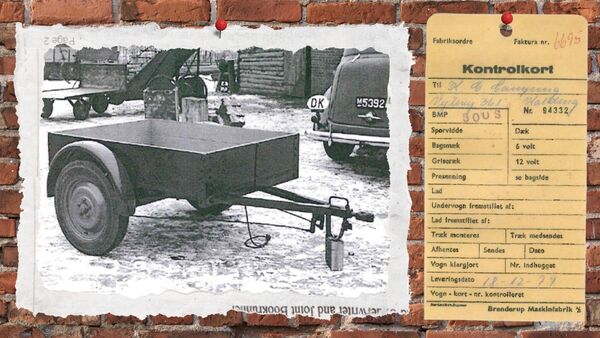
Shortly thereafter, Brenderup began developing what would become the company’s first real trailer: the BMP model. These were the first tow-behind trailers, built for cars and light transport—a new category for both Denmark and Brenderup.

The BMP trailer was simple yet clever, robust in construction, and designed to last many years. It was built with the same care as the rubber wagons, but aimed at a completely different market: craftsmen, small business owners, and private individuals who needed to transport more than their car could handle.

1960s–70s – Expanding the Range

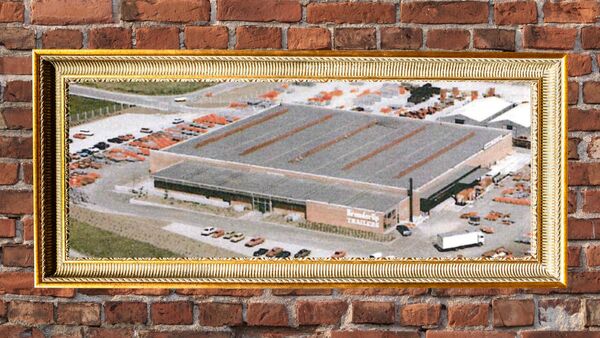
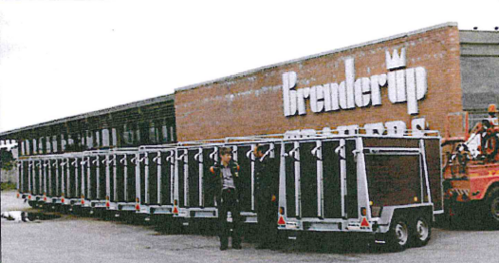
By the early 1960s, it was clear that the trailer was Brenderup’s future. Roads filled with cars, and the need for reliable transport grew. Production expanded so quickly that a new factory was built in Åby, yet not everything fit. Some operations remained in Brenderup for many years.

At the same time, the range broadened: in 1966, the popular universal trailer was launched, sold across the Nordic countries and Germany. This was followed by specialized trailers such as boat trailers, horse trailers, car transporters, and the first box trailers, the “Cargoliners.”

In 1970, Brenderup trailers were introduced in both Sweden and Norway, and a partnership with Åkland in Trollhättan became a milestone. At their request, a new braked model was developed, selling over 700 units in its first year.

In collaboration with German dealers, who demanded high durability, Brenderup began galvanizing its trailers—a huge step forward for quality.
 

1980s–90s – From Nordic Favorite to International Brand

In the 1980s, Brenderup expanded across Europe and globally, exporting to Germany, Austria, Switzerland, and Japan, among others. At the same time, the range grew to include multiple series of trailers, boat trailers, and upgraded horse and car transporters. 1986 was a key year: the new Royal horse trailer, the modern L-series, and improved cargo protection with STS profiles were launched. The following year saw a completely new generation of boat trailers with a tilt-roll system that made loading easier than ever.

In 1986, trailer number 200,000 also rolled off the production line, a symbol of how far the company had come since Ove first opened the doors to his forge in 1936.

2000s – New Factories, New Opportunities, Same Danish Heart

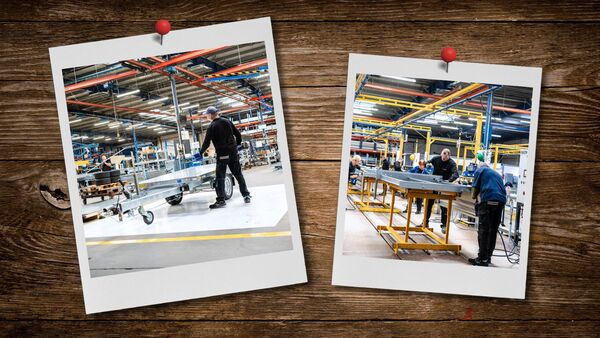
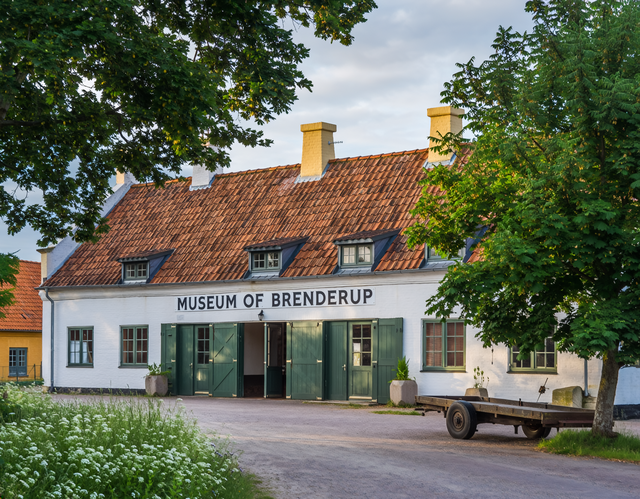
As you move through the museum, you reach the most recent decades, a period in which Brenderup made great strides but never lost its soul. In 2003, the factory in Wielen, Poland, was inaugurated, later growing into a modern production facility supporting all Brenderup markets. In 2012, Brenderup received its current logo, a symbol of quality and a heritage we proudly carry.

In 2014, the journey took a new direction with the formation of Brenderup Group, an independent company where Brenderup became one of the leading premium brands. That the entire group chose to carry the Brenderup name speaks volumes about the legacy and quality built since 1936.

At the same time, products continued to evolve. In 2020, a completely revised boat trailer range was launched with clearly divided series and smarter features. In recent years, Brenderup has also made major steps into the future of trailer purchasing: Click & Collect was launched, a modern concept allowing customers to order their trailer online. A natural step after 90 years of learning, innovation, and close contact with our customers.

Despite all the development, one thing remains unchanged: it all started in Brenderup, and our Danish heart still beats strongly. Here we carry our history while continuing to create smarter solutions, new products, and new opportunities.
 

Brenderup. 90 years of experience. 90 years of movement. Always On The Move.

When you leave the Brenderup Museum and look out over the landscape, you can hear the hammering from 1936—a reminder that the future is always built by those brave enough to create it themselves.

Brenderup Universal Trailer

In 1966, production of the universal trailer was in full swing, which would become the most important product for many years to come.

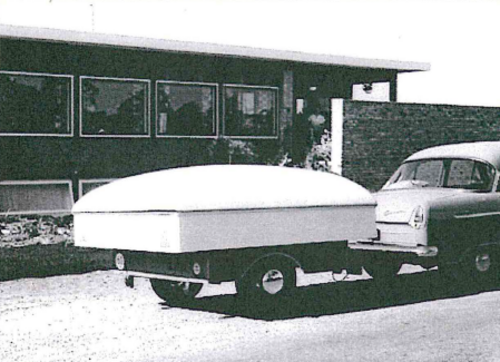
Brenderup Caravan Trailer

During the 1960s, production began on the “caravan trailer,” a tent trailer that could be mounted on a regular trailer.

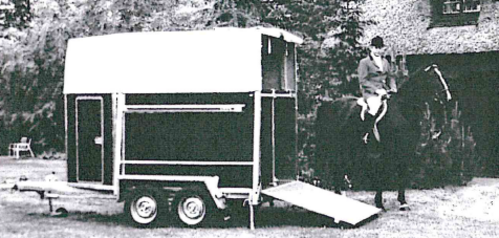
Brenderup Horse Transport

In the 1970s, we began producing horse trailers, sparking our interest in veneer materials. To ensure the highest quality, we traveled the world searching for a veneer supplier that met our standards.

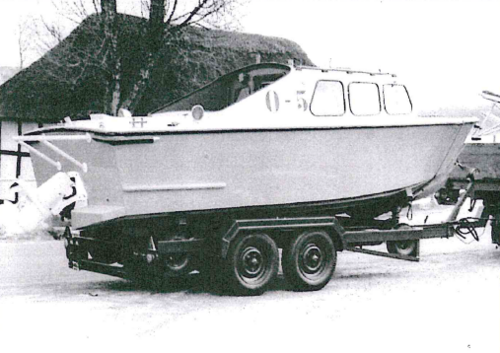
Brenderup Boat Trailer

In the 1970s, Brenderup began manufacturing boat trailers.

Brenderup Box Trailer

Our first box trailer, the Cargoliner, was launched in 1978 and became the start of the series that today has evolved into Cargo Dynamic and Cargo Excellent.

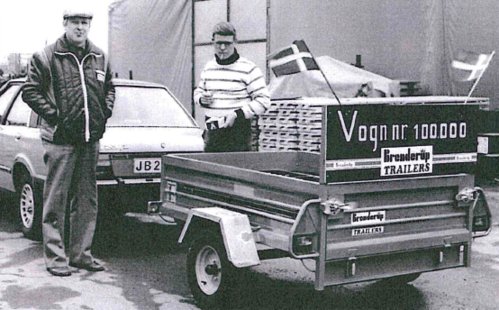
Brenderup’s 100,000th Trailer Sold

In 1980, Brenderup sold its 100,000th trailer, a Danish version of the then-current 400 S model.

BRENDERUP GROUP MILESTONES

1936 Brenderup founded in the village of Brenderup, Funen.
1952 Trailer production begins.
1966 Universal trailer launched and becomes a bestseller.
1970 Horse trailer production begins.
1972 First boat trailers launched broadly on the market.
1978 Cargoliner launched – Brenderup’s first box trailer.
1980 Trailer number 100,000 manufactured.
1991 Brenderup becomes part of Eldon.
1997 Scandinavia’s largest trailer brand becomes part of Thule Group.
2003 Factory in Wielen, Poland, inaugurated.
2012 Brenderup receives its current logo.
2014 Brenderup Group formed as an independent company, with Brenderup as one of its premium brands.
2019 Brenderup’s Swedish factory moves to Stigamo, Jönköping.
2020 New boat trailer range launched, divided into X-line and Premium.
2021 Storskogen becomes the new owner of Brenderup Group.
2024 Click & Collect launched.
2026 Brenderup celebrates 90 years!